Exploring the 3D Layered Cross Mandala: Art, Symbolism, and Practical Design
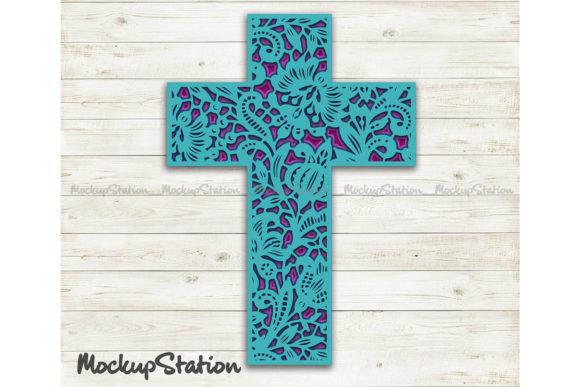
At the intersection of sacred geometry and modern fabrication lies a design format that has quietly captured the attention of artists, crafters, interior decorators, and spiritual seekers alike: the 3D Layered Cross Mandala. This intricate composition fuses the symmetry of the mandala with the iconic form of the cross, rendered in multiple planes to create depth, shadow, and visual movement. Unlike flat prints or single-layer cutouts, the layered construction gives the piece a tangible dimensionality that shifts as lighting changes and as the viewer moves around it. Whether you are exploring it for personal meditation, a home décor project, or a commercial product line, understanding what makes this design distinctive can help you evaluate its fit for your needs.
The Anatomy of a 3D Layered Cross Mandala
To appreciate the 3D Layered Cross Mandala, it helps to break it down into its three core components: the cross, the mandala geometry, and the layered structure itself.
The Cross as Structural Anchor
The cross provides a central axis and a recognizable silhouette. In layered designs, the cross often forms the base or the topmost element, depending on the intended visual hierarchy. It may be rendered as a classic Latin cross, a Celtic cross, or an abstract linear form. The arms of the cross serve as natural breakpoints for mandala rings, creating a rhythm of repetition and contrast between vertical/horizontal lines and circular arcs.
Mandala Geometry and Repetition
Mandala patterns rely on radial symmetry, concentric rings, and repeating motifs such as petals, dots, scallops, and teardrops. In a 3D Layered Cross Mandala, these motifs are distributed around the cross, often nested within concentric circles that radiate from the center. The repetition is not merely decorative—it creates a sense of order and balance that many find calming, making these pieces popular in mindfulness and meditation contexts.
The Third Dimension: Layering Mechanics
Unlike a single-layer engraving or cutout, a 3D layered design uses multiple stacked sheets of material—typically wood, acrylic, cardstock, or metal—spaced apart by small offsets or standoffs. Each layer holds a portion of the overall pattern. When assembled, the layers sit at different depths, producing shadows and highlights that change with viewing angle. Typical layer counts range from three to seven, though more complex designs can go higher. The key is that each layer contributes a unique part of the pattern, so no single layer tells the whole story.
Who Benefits from a 3D Layered Cross Mandala?
The appeal of this design crosses several audiences, each finding value in different aspects of its construction and visual effect.
- Artists and crafters appreciate the versatility of materials and the ability to scale the design from small wall hangings to large statement pieces. Laser cutting and CNC routing are common fabrication methods, and the layered format is forgiving for those experimenting with depth for the first time.
- Interior decorators and homeowners use layered mandala crosses as focal points in entryways, living rooms, meditation corners, or faith-based spaces. The three-dimensional quality adds texture to flat walls without taking up floor space.
- Small business owners in the home décor or gift market often stock these pieces because they appeal to both spiritual and aesthetic buyers. The combination of cross symbolism and mandala art broadens the potential customer base beyond strictly religious audiences.
- Individuals seeking mindfulness tools find that tracing the concentric rings of a mandala—especially one with depth—can serve as a focusing exercise. The tactile quality of layered pieces adds a sensory element that flat images lack.
- Gift-givers choose these items for occasions like housewarmings, confirmations, birthdays, or as symbols of encouragement during difficult times. The layered cross mandala carries connotations of protection, unity, and spiritual growth.
Strengths and Considerations of the Format
Like any design medium, the 3D Layered Cross Mandala has inherent strengths as well as practical limitations worth weighing before purchase or production.
Strengths
- Visual depth and light interaction. The primary advantage is the play of light and shadow across layers. Even a simple two-tone color scheme gains complexity through depth. LED backlighting amplifies this effect dramatically, making the piece appear to glow from within.
- Durability through layered construction. Multiple layers bonded together can be surprisingly rigid, especially when using materials like plywood or acrylic. The cross shape itself adds structural stability, reducing warping in thinner materials.
- Customizability. Because each layer is a separate cut file, designers can experiment with swapping out motifs, changing colors, or adjusting the spacing between layers. This makes it easy to tailor a design for a specific room palette or personal meaning.
- Quiet presence. Unlike loud patterns or busy wall art, the symmetry of the mandala and the familiarity of the cross tend to create a calming focal point rather than a distracting one.
Considerations and Limitations
- Dust accumulation. The gaps between layers can collect dust over time, especially in homes with pets or open windows. Cleaning requires careful dusting with a soft brush or compressed air rather than a simple wipe.
- Assembly effort. If you are purchasing a flat-pack or DIY kit, you will need to align and glue or screw the layers together. Misalignment can ruin the depth effect, so patience and precision are required.
- Weight and mounting. Larger layered pieces can be heavier than they look, particularly if made from thick plywood or acrylic. Proper wall anchors are essential, and some buyers prefer a standing display easel instead of wall mounting.
- Cost scaling. The price increases with the number of layers and the material quality. A five-layer birch plywood piece will cost noticeably more than a three-layer MDF version. Buyers on a budget may need to prioritize either depth or material.
Real-World Applications and Scenarios
To see how a 3D Layered Cross Mandala performs in daily use, consider a few realistic scenarios.
Scenario 1: Home Meditation Corner. A practitioner sets up a small meditation space in a bedroom corner. They hang a 3D Layered Cross Mandala on the wall opposite their cushion. As natural light shifts through the day, the shadows cast by the cross arm move slowly across the mandala rings. The practitioner uses the concentric layers as a visual anchor for breathing exercises, noting how the depth of the piece helps sustain focus better than a flat poster did.
Scenario 2: Small Retail Display. A boutique owner places several layered mandala crosses on a shelf near the checkout counter, each in a different color combination—natural wood, white-and-gold, and black-and-silver. Customers waiting in line notice the way the layers catch the track lighting. Within two weeks, the owner reorders because the pieces have become conversation starters and impulse buys, especially among shoppers looking for unique housewarming gifts.
Scenario 3: Artist Portfolio Piece. A laser engraver designs a custom five-layer mandala cross for a local church's anniversary gift. The cross layer is cut from cherry wood, while the mandala rings use maple and walnut for contrast. The client requests an engraved inscription on the back of the base layer. The result becomes a showcase item on the engraver's social media, attracting commissions from other religious organizations and spiritual groups.
Evaluating Suitability for Your Project
If you are considering purchasing, designing, or producing a 3D Layered Cross Mandala, a few evaluation points will help you make an informed choice.
- Assess the intended setting. Will the piece hang in a high-traffic hallway, a quiet study, or outdoors? Indoor-only placement is recommended for most materials. Acrylic and sealed metal can handle more humidity than raw wood or paper.
- Consider scale relative to the room. A mandala cross that is too small can look lost on a large wall, while an oversized piece may overwhelm a compact space. Measure the wall area and visualize the piece with painter's tape before committing.
- Evaluate layer count versus visual complexity. Three layers offer a clean, modern look with subtle depth. Five or more layers create a richer shadow play but also increase cost and assembly time. Beginners often start with three layers to build confidence before attempting more complex builds.
- Check material compatibility with your environment. If your home has direct afternoon sunlight, some woods may fade over time. Acrylic resists fading but can scratch if cleaned improperly. Plywood with a clear coat holds up well in most indoor conditions.
- Look for file transparency. If you are purchasing a digital design file for DIY cutting, verify that the layer files are clearly labeled, include a reference image, and specify recommended material thickness and spacing. Poorly organized files can lead to wasted material and frustration.
Final Thoughts on the 3D Layered Cross Mandala
The 3D Layered Cross Mandala is more than a decorative trend—it is a thoughtful fusion of form, symbolism, and fabrication technique. Its layered construction invites engagement: you can view it head-on for a unified pattern or from an angle to appreciate the separation between planes. For the maker, it offers a satisfying challenge of alignment and material selection. For the viewer, it provides a quiet focal point that rewards repeated looking. Whether you are drawn to its spiritual resonance, its craft potential, or simply its visual elegance, this design format holds broad appeal across creative and practical domains. By understanding its anatomy, strengths, and real-world behavior, you can confidently decide how—or whether—it fits into your space, your art, or your business.